Indie horror directors carry a massive weight on their shoulders in the modern film industry. Names like Ari Aster and Robert Eggers live with heavy studio and fan pressure with every single release. Modern audiences demand the next classic right away, pushing creators to outdo their previous hits.
Many filmmakers cave to the commercial demands of huge studios just to survive in the business. Luckily, writer-director Natalie Erika James dodges that trap completely in this Saccharine movie review. Following the massive critical success of Relic (2020), she proves her true home is the independent scene.
She flirted with big studio franchises by helming the recent horror prequel Apartment 7A (2024). Yet, her authentic voice gains true power in the alternative, creator-driven horror space. The new film Saccharine shows she knows exactly how to weaponize the genre to critique society.
The Plot of Saccharine and Diet Culture
The story tackles the severe neuroses fueled by the relentless hunt for the perfect physical body. The film directly confronts a medical and aesthetic system making billions off our physical insecurities. We get a razor-sharp critique of a toxic diet culture that routinely makes thousands sick globally.
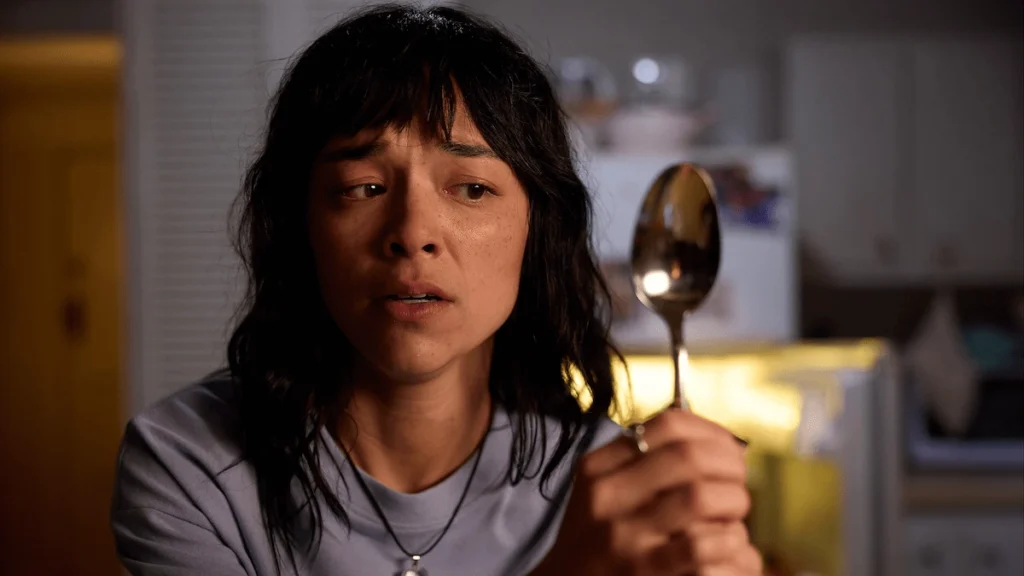
The plot follows Hana, played brilliantly by actress Midori Francis. She is a dedicated medical student battling severe complexes about her own physical appearance and weight. This non-stop dissatisfaction aggressively damages every single part of her personal, social, and academic life.
Her emotional blocks even stop her from freely exploring her newly discovered queer sexuality. The script builds an atmosphere of social anxiety that feels incredibly relatable to the current generation. Anyone who has ever faced aesthetic pressure gets the protagonist’s silent, crushing pain immediately.
The turning point hits when Hana bumps into an old classmate at a local neon-lit bar. Her friend spills the dark secret behind her sudden, seemingly magical, and extreme weight loss. She introduces an underground, unapproved pill going by the street name “The Grey.”
The Artificial Sweetener Metaphor and Fake Fixes
The miracle drug’s effects show up fast on the young med student’s body and overall silhouette. Hana starts losing weight at a breakneck pace, but the physical and mental toll is extremely high. A dark, ghostly presence starts stalking her daily routine and haunting her apartment.
The movie speaks openly to the current era of popular weight-loss drugs like Ozempic and Mounjaro. We live in a landscape of cheap, irresponsible, and fast fixes for highly complex health issues. The director uses the supernatural entity to embody the real, unstudied dangers of these miracle substances.
The original title, Saccharine, carries a highly ironic and clever meaning for the audience. It draws a direct line between artificial sweeteners and desperate rapid weight loss methods. It sets a visual trap that tricks the eye and the stomach simultaneously, offering zero real substance.
A New Aesthetic in Natalie Erika James’ Direction
Fans who watched Relic remember that production’s slow, oppressive, and heavy tone well. James’ debut feature relied on a visual style heavy with gothic imagery and dense melancholy. That universe tackled the horrors of dementia and aging using thick textures, dark costumes, and claustrophobic rooms.
The director’s new project surprises fans by taking a completely opposite visual route. She ditches the gray, moody atmosphere to embrace an agile, heavily colorful pop style. The vibrant palettes and brightly lit sets dictate the fast pace right from the opening minutes.
The art direction leans hard into glossy food textures to trigger both visual disgust and desire. An early sequence shows Hana staring at personal trainer Alanya (Madeleine Madden) with total obsession. This specific look mixes rampant consumerism, aesthetic jealousy, and explicit sexual attraction all at once.
Escaping the Gothic to Embrace Stylized Pop
James builds fear using mundane environments that look way too familiar to everyday viewers. A nicely decorated middle-class apartment becomes the main stage for violent, disturbing hauntings. The horror hides right in the brightly lit corners of our fast-paced, digital daily lives.
The large, traditional medical school hallways take on a cold, cavernous, and clinical feel. The routine dissection of corpses in class contrasts perfectly with the living’s obsession with pristine aesthetics. The students’ academic work adds a reflective layer on the sheer fragility of human flesh.
Cinematographer Charlie Sarroff, known for his work on the massive horror hit Smile, handles the visuals here. He teams up with the highly talented production designer Josephine Wagstaff to build this world. The technical crew leans into bright but sterile colors to craft a highly fake, artificial universe.
Binge Eating and Modern Anxiety in Horror
Some casual viewers might brush the film off as just another generic body horror entry. The script puts brutal body treatments and physical side effects front and center on screen. Comparisons to Coralie Fargeat’s acclaimed film The Substance will pop up fast in online fan debates.
Yet, Natalie Erika James’ creation refuses the label of a cheap commercial knock-off. The script avoids riding a passing trend to speak about highly intimate, generational pain instead. The filmmaker uses the big screen to dump personal experiences in a frank, brave, visceral way.
The biggest narrative win lies in discussing binge eating without sugarcoating anything for the viewer. The anxiety triggered by family, intimate blocks, and social demands feeds the main character’s paranoia. The protagonist’s internal monster grows stronger with every new harsh restriction she puts on her stomach.
Complex Characters Mirroring Current Society
The direction skillfully weaves subplots together under the giant umbrella of eating compulsions. Hana’s parents, played brilliantly by Showko Showfukutei and Robert Taylor, mirror the girl’s deepest fears. They represent two opposite versions of a life ruined by silent, untreated addictions and generational trauma.
The terrifying character Bertha acts as the graphic physical form of the student’s worst feelings. Hana ends up projecting her biggest mental anguishes and body image disorders onto this dark figure. Bertha embodies dangerous sleepwalking and reactive binge eating in one single, tangible, fleshy threat.
This evil entity gains absurd, violent energy every time the protagonist refuses to eat high-calorie sweets. The monster strikes when physiological hunger crashes into the frustration of never being perfectly thin. Society preaches that a thin frame brings acceptance, while eating brings nothing but total contempt.
To balance out this crushing psychological weight, the plot brings in the empathetic Josie. Masterfully played by Danielle Macdonald, she acts as the story’s grounded moral compass. Josie delivers the needed rational counterpoint to try and stop the madness eating her friend alive.
Using the Grotesque and Surrealism Just Right
The production bravely bumps up against the massive taboo surrounding the act of cannibalism. The narrative constantly hints at a bizarre fusion between restrictive dieting and raw carnivorous desire. The script features sharp, fast dialogue to dissect themes like predatory consumption and queer identity.
These multiple thematic layers shield the work from critics who might see an empty, flashy plot. The movie refuses to hand the audience chewed-up answers, leaving everyone soaked in visual discomfort. The grotesque scenes serve a clear narrative goal, staying far away from cheap, unearned shock value.
The allegories on screen are heavy, visually intense, and highly difficult to digest easily. James proves she has zero fear of turning her own viewer’s stomach right in the theater seat. The stylized body horror attacks the normalization of suffering in silence for the sake of forced beauty.
Verdict: Indie Horror Shows Its Raw Power
Making it safely to the end credits takes serious emotional prep and a lot of nerve. The film builds a chaotic, loud ending that brutally ties together all the filmmaker’s intentions. The final message hits hard, hammering home that modern aesthetics have literally eaten our humanity.
The auteur thriller space breathes easier when professionals embrace such wild, singular ideas. The mind behind this experience proves to be a top name in the contemporary Hollywood generation. She exposes the raw fact that real demons live inside the trendiest beauty clinics.